
As your due date approaches, it’s completely normal to feel a mix of excitement, anticipation, and, let’s be honest, a little anxiety. If you’re a
first-time mom, one question is probably loop-playing in your mind: “How will I actually know when it’s time to go to the hospital?”
Between random third-trimester twinges and false alarms like Braxton Hicks, telling real labor apart from practice labor can feel confusing.
That’s where the 4-1-1 Rule for Labor comes in. It’s a simple, easy-to-remember guideline designed to help you spot active labor and know precisely when to grab your hospital bag and call your care team.
At Angel Agastya Hospital, Dr. Kalpana Aggarwal and our maternity team love empowering moms with clear, practical knowledge so you can face labor feeling confident, calm, and prepared.

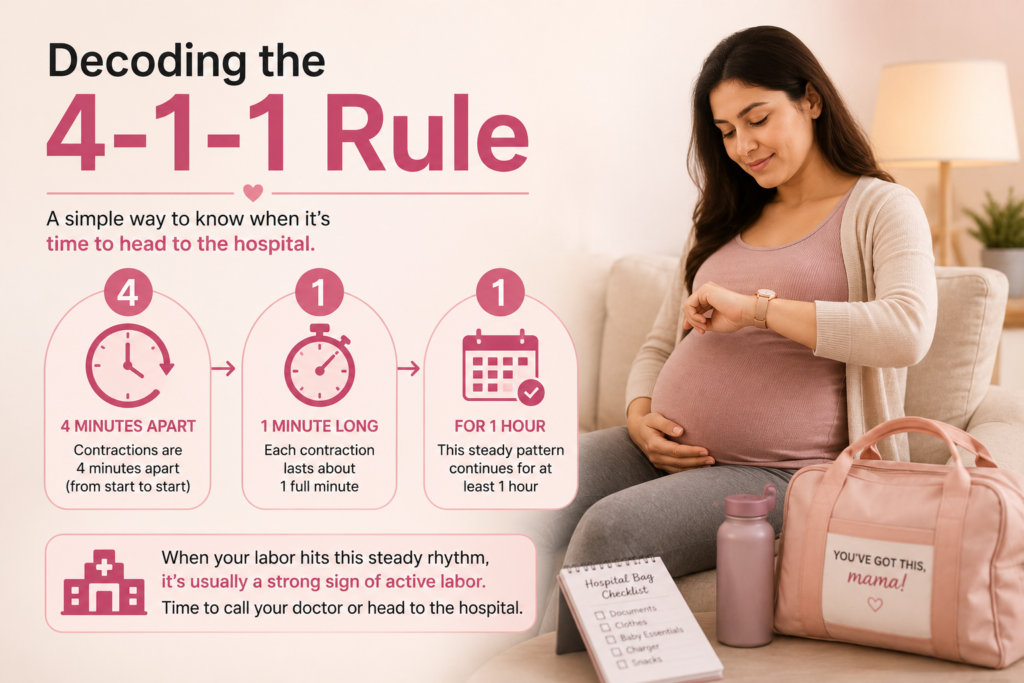
Decoding the 4-1-1 Rule
The 4-1-1 Rule is a simple timing formula to help you track your contractions:
- 4: Your contractions are 4 minutes apart (measured from the start of one to the start of the next).
- 1: Each contraction lasts for about 1 full minute.
- 1: This consistent pattern keeps going for at least 1 hour.
When your labor hits this steady rhythm, it’s usually a strong sign that your body has shifted into active labor, and it’s time to head to the hospital or call your obstetrician.
Real Labor vs. Practice Turns (Braxton Hicks)
Your uterus is a muscle, and during those final weeks, it likes to practice! These practice contractions known as Braxton Hicks can be sneaky, but they behave very differently from the real thing.
| Feature | Braxton Hicks (False Labor) | True Active Labor |
| Pattern | Irregular and unpredictable | Regular, timed, and gets closer together |
| Intensity | Mild to uncomfortable; stays about the same | Gradually gets stronger and more intense |
| Movement | Often stops or fades if you drink water, rest, or walk | Keeps coming no matter what position you’re in |
| Location | Usually felt only in the front of the belly | Often starts in the lower back and wraps around |
Quick Tip for Timing: Time your contractions from the very beginning of one to the very beginning of the next. Use a simple stopwatch or a contract-tracker app to keep things easy!

Other Signs That Labor Is On the Horizon
Contractions aren’t the only signal your body gives you. Keep an eye out for these other common signs that your baby is getting ready to make an entrance:
- Your Water Breaks: Whether it’s a dramatic gush or a continuous light trickle, once your amniotic sac ruptures, you should contact your doctor right away, even if contractions haven’t started yet.
- The “Bloody Show”: As your cervix begins to open and thin out, you might notice a pinkish or blood-tinged mucus discharge.
- Persistent Lower Back Pressure: Constant, aching lower back pain that comes in waves often accompanies early labor.
- Pelvic “Lightening”: You might suddenly feel like you can breathe easier because the baby has dropped lower into your pelvis (though this means more pressure on your bladder!).
When to Skip the 4-1-1 Rule and Head Straight In
While the 4-1-1 pattern is a great general rule of thumb, it doesn’t apply to every scenario.
You should reach out to your doctor or go straight to the hospital immediately if you experience:
- Your water breaking (regardless of contractions)
- Bright red vaginal bleeding
- A sudden drop or change in your baby’s movements
- Severe, persistent abdominal pain
- Signs of high blood pressure (severe headache, sudden facial swelling, or blurred vision)
- A high-risk pregnancy, a history of very fast previous births, or if you’re carrying twins
When in doubt, always call. Your maternity team is there to support you, and no question is ever too small.

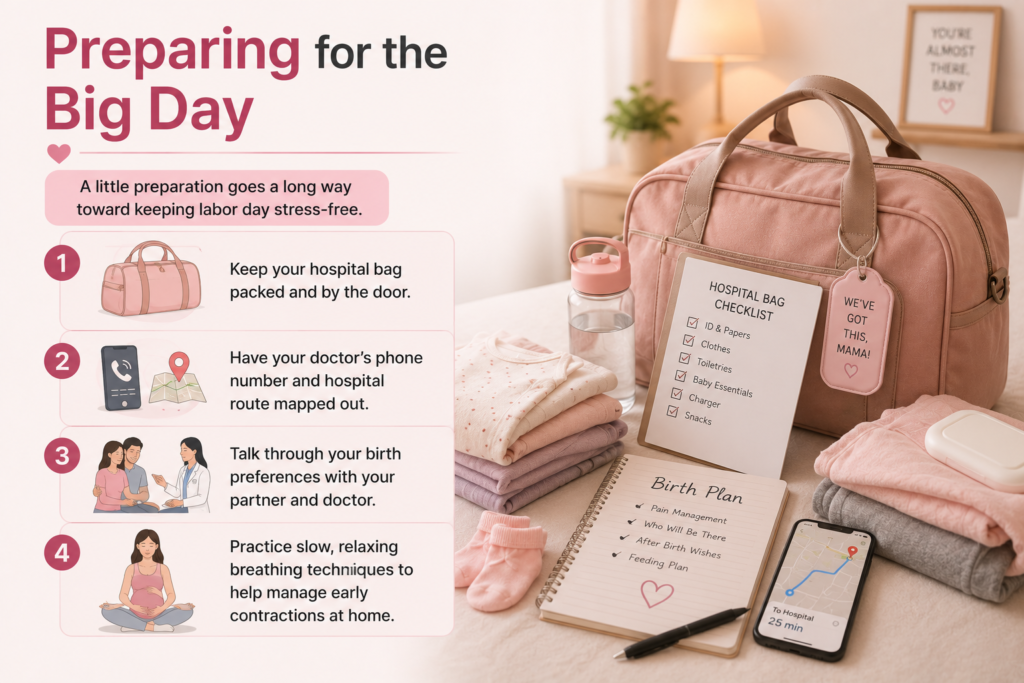
Preparing for the Big Day
A little preparation goes a long way toward keeping Labor Day stress-free. In your final month:
- Keep your hospital bag packed and by the door.
- Have your doctor’s phone number and hospital route mapped out.
- Talk through your birth preferences with your partner and doctor.
- Practice slow, relaxing breathing techniques to help manage early contractions at home.
Compassionate Pregnancy & Delivery Care at Angel Agastya Hospital
At Angel Agastya Hospital in Palam, we believe every birth story should be safe, comfortable, and respected. Under the guidance of Dr. Kalpana Aggarwal, our team provides comprehensive maternity support tailored entirely to you.
Why expecting families choose us:
- 24/7 Emergency Support: Fully equipped labor rooms and round-the-clock medical care.
- Personalized Care Plans: Support for safe normal deliveries as well as expert C-section services when medically necessary.
- High-Risk Expertise: Dedicated monitoring for complex or high-risk pregnancies.
- Complete Postpartum Guidance: Step-by-step help with newborn care, recovery, and breastfeeding.
“The 4-1-1 Rule is a fantastic roadmap, but never forget to trust your instincts. Pay attention to what your body is telling you, stay connected with your care team, and remember that every labor journey is beautifully unique.”
— Dr. Kalpana Aggarwal
Frequently Asked Questions
Q1: What if my contractions are painful but aren’t 4 minutes apart yet?
Early labor can last a while! As long as you aren’t experiencing any red-flag symptoms (like bleeding or fluid leaks), try staying comfortable at home, take a warm shower, sip water, and rest between contractions until they build a steady pattern.
Q2: Should I go to the hospital if my water breaks without contractions?
Yes. Once your water breaks, the protective seal around your baby is open, which increases the risk of infection. Contact your gynecologist and head to the hospital for evaluation.
Q3: Is the 4-1-1 rule the same if this is my second baby?
Second (and subsequent) labors often progress much faster than the first! Your doctor may advise you to head to the hospital sooner, such as when contractions are 5 minutes apart, rather than waiting for the full 4-1-1 pattern.
Ready to Welcome Your Baby with Confidence?
Every step of pregnancy is special, and having the right team by your side makes all the difference. Whether you have questions about labor symptoms, birth planning, or prenatal check-ups, we’re here to help you every step of the way.