
Preparing for childbirth is one of the most transformative, exciting, and occasionally overwhelming chapters of your life. As your due date draws near, it is completely natural to wonder what labour will actually feel like, how long it will take, and why every birth story sounds so vastly different.
Many expecting moms focus almost exclusively on contractions or whether the baby is head-down. In medical practice, however, labour is a delicate interplay of several distinct variables. Obstetricians look at a framework known as the 5 P’s of Delivery to assess how labour is moving along and keep both you and your baby safe.
Understanding these five factors will give you a clearer view of what is happening inside your body, helping you feel grounded, confident, and prepared as you approach birth.
What Are the 5 P’s of Delivery?
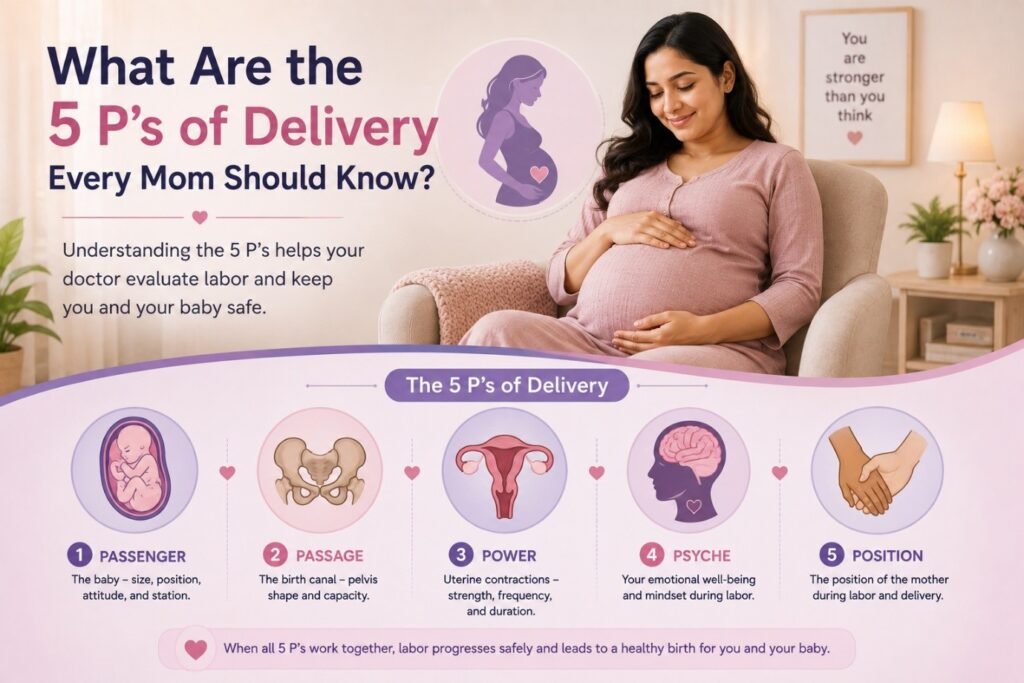
The 5 P’s stand for:
- Power ( Uterine Contractions)
- Passenger ( The Baby)
- Passage ( The Birth Canal & Pelvis)
- Position ( Maternal Movement & Body Placement)
- Psychology ( Emotional & Mental Wellbeing)
Think of labour as a team effort where all five elements need to communicate. When these factors align smoothly, labour tends to progress naturally. If a hurdle pops up in one area, your maternity care team can step in with targeted support.
Let’s break down each element in practical terms.
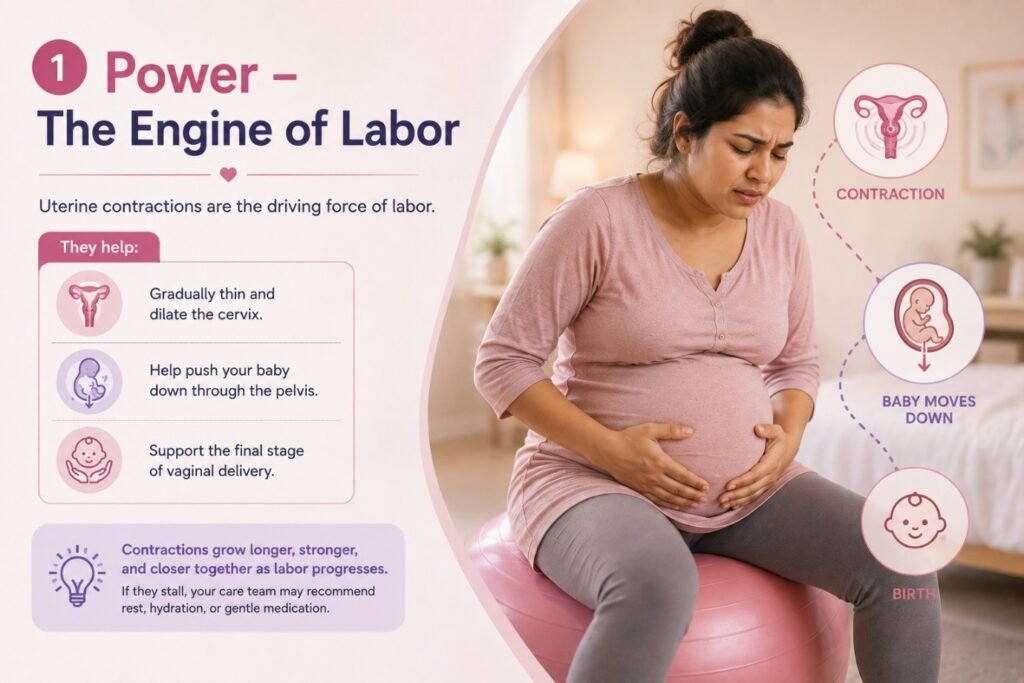
1. Power – The Engine of Labour
The first “P” refers to the mechanical force behind labour: uterine contractions.
Throughout labour, contractions perform three vital jobs:
- They gradually thin and dilate (open) the cervix.
- They help push your baby down through the pelvis.
- They support the final stage of vaginal delivery.
Early contractions often feel like mild menstrual cramps or intermittent backaches. As labour establishes, these waves grow longer, stronger, and closer together. If contractions stall or lack the strength needed to move labour forward, your care team will evaluate whether to let things rest naturally or offer medical encouragement, such as gentle medication or hydration.
2. Passenger – Your Baby’s Journey
The second “P” is your baby. Every detail about the “passenger” plays a role in how labour unfolds:
- Presentation: Is the baby head-first (vertex) or bottom-first (breech)?
- Position: Is the baby facing your back (anterior) or your stomach (posterior)?
- Size & Head Flexion: How the baby tucks their chin makes a big difference in how smoothly they glide through the birth canal.
While a head-down, chin-tucked position is ideal for a vaginal birth, babies are active participants who often shift right up until labour begins. Your obstetrician monitors these movements closely using ultrasound and clinical checks.

3. Passage – The Birth Canal
The third “P” represents the physical pathway your baby travels: your bony pelvis, cervix, pelvic floor muscles, and vaginal canal.
Pelvic anatomy varies naturally from person to person. The shape and flexibility of your pelvic joints—which naturally loosen late in pregnancy thanks to birth hormones—determine how easily your baby passes through. Rather than making assumptions early on, your doctor continually assesses how your baby fits through the passage as labour progresses.
4. Position – Your Movement During Labour
Positioning isn’t just about where the baby is; it is also about how you move your body during labour. Gone are the days when labouring mothers were restricted to lying flat on a bed.
Changing positions frequently can ease discomfort, manage contraction pain, and use gravity to your advantage. Effective labour positions include:
- Walking or swaying
- Sitting upright on a birthing ball
- Side-lying with a peanut ball
- Kneeling or leaning forward over a bed or support partner
Your medical team will guide you toward positions that maximize your comfort while keeping continuous monitoring intact if needed.
5. Psychology – Your Mindset and Emotional State
Childbirth is as much a psychological event as a physical one. Fear, stress, and high anxiety trigger stress hormones like adrenaline, which can occasionally slow down labour contractions.
Conversely, feeling safe, informed, and emotionally supported releases oxytocin—the key hormone that drives labour. A supportive environment, clear communication with your medical team, birth preparation classes, and a trustworthy support partner work together to keep your mind calm and your body receptive.
Why Do the 5 P’s Matter?
Looking at childbirth through the 5 P’s prevents doctors and midwives from focusing on just one single metric.
- Strong contractions (Power) won’t carry labour alone if the baby (Passenger) is turned sideways.
- A ideal baby position requires steady uterine power to push forward.
- Emotional reassurance (Psychology) can reduce physical tension, allowing the body to relax into labour.
This holistic view ensures that care is tailored to your unique body and situation, rather than a rigid timeline.

Can the 5 P’s Guarantee a Normal Delivery?
Not entirely. The 5 P’s serve as an assessment guide rather than a absolute crystal ball.
Labour is dynamic. A pregnancy that starts smoothly might encounter unexpected changes that make a cesarean birth the safest path forward. On the flip side, labour that starts slowly can shift into a straightforward vaginal birth with time and gentle support.
The ultimate goal of monitoring the 5 P’s isn’t just achieving a specific type of delivery—it is ensuring a healthy, safe outcome for both you and your baby.
How to Prepare Your Body and Mind for Labour
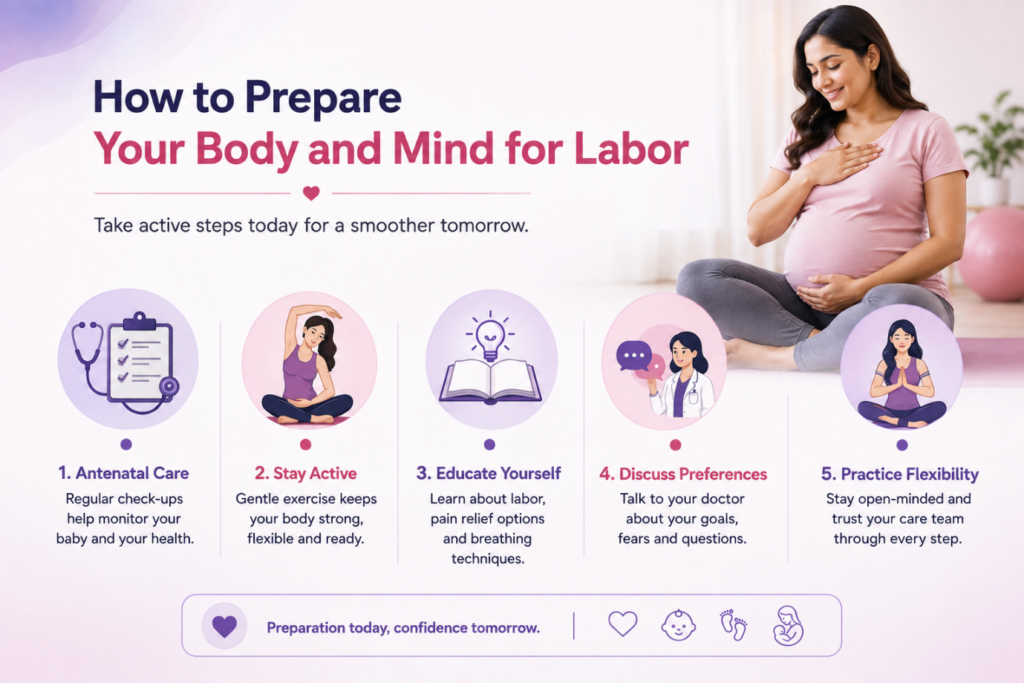
While you cannot control every dynamic of childbirth, you can take active steps to support your journey:
- Prioritize Antenatal Care: Regular prenatal visits give your doctor space to monitor baby growth, track position, and keep tabs on maternal health.
- Stay Active: Gentle movement like daily walking, prenatal yoga, or targeted stretching keeps your hips mobile and prepares your body for labour endurance.
- Educate Yourself: Learn about the stages of labour, pain management choices, and breathing techniques so nothing feels like a complete surprise.
- Discuss Your Birth Preferences: Have an open conversation with your gynecologist about your goals, fears, and questions long before your due date arrives.
- Practice Flexibility: Approach birth with an open mind. Trusting your maternity team allows you to adjust smoothly if labour takes an unexpected turn.
Comprehensive Maternity Care at Angel Agastya Hospital
Every birth story deserves personalized, compassionate care. At Angel Agastya Hospital, Dr. Kalpana Aggarwal provides dedicated maternity and obstetric care for women across Palam, Dwarka, Sagarpur, Uttam Nagar, and Delhi Cantt.
Our maternity services include:
- Routine Antenatal Care & Check-ups
- Personalized Normal Delivery Support
- High-Risk Pregnancy Management
- VBAC (Vaginal Birth After C-Section) Consultations
- Postpartum Recovery & Newborn Care Support
Frequently Asked Questions
1. What are the 5 P’s of delivery?
The 5 P’s are Power (uterine contractions), Passenger (the baby), Passage (the pelvis and birth canal), Position (maternal movement during labour), and Psychology (the mother’s emotional state).
2. How do the 5 P’s affect labour speed?
If all five factors are working harmoniously—strong contractions, an optimal baby position, an accommodating pelvis, active maternal movement, and a calm mindset—labour generally moves along smoothly.
3. Can I control any of the 5 P’s myself?
Yes! You have direct control over your Position (by staying active and changing postures during labour) and your Psychology (by taking childbirth classes, practicing relaxation techniques, and surrounding yourself with a supportive team).
4. What is the most common reason for labour stalling?
Labour often slows down if contractions drop in strength (Power) or if the baby’s head isn’t pressing directly against the cervix (Passenger/Position). Simple fixes like changing labour positions, walking, or getting IV fluids often help restart momentum.
5. How does emotional stress slow down labour?
High anxiety triggers adrenaline, which acts as a natural antagonist to oxytocin (the hormone responsible for labour contractions). Staying calm and feeling supported helps keep your body’s natural birth hormones flowing.
6. How do I consult Dr. Kalpana Aggarwal for pregnancy care in Palam?
You can book an antenatal consultation directly with Dr. Kalpana Aggarwal at Angel Agastya Hospital for personalized care throughout your pregnancy journey.
Book Your Pregnancy Consultation Today
Whether you are in your first trimester or preparing for your upcoming delivery, expert guidance makes all the difference. Reach out to Dr. Kalpana Aggarwal at Angel Agastya Hospital to plan your care, discuss your birth preferences, and get the dedicated support you deserve.
📞 Call or WhatsApp us today to schedule your consultation.