
If you live in or around Palam, you may already have started searching for a maternity hospital in Palam. You may see hospitals offering different room categories, delivery packages and maternity services. But how do you know what actually matters?
Finding out that you are pregnant is an exciting moment, but it also comes with a long list of decisions. One of the biggest is choosing where you want to receive your maternity care and eventually have your delivery.
A comfortable room is nice. A convenient location is helpful.
But when it comes to maternity care, there are some things that deserve much more attention.
The right maternity hospital should be able to look after you during routine pregnancy care, support you through labor and delivery, and respond appropriately if something unexpected happens.
So, before you decide, let’s look at the facilities and services you should actually be asking about.
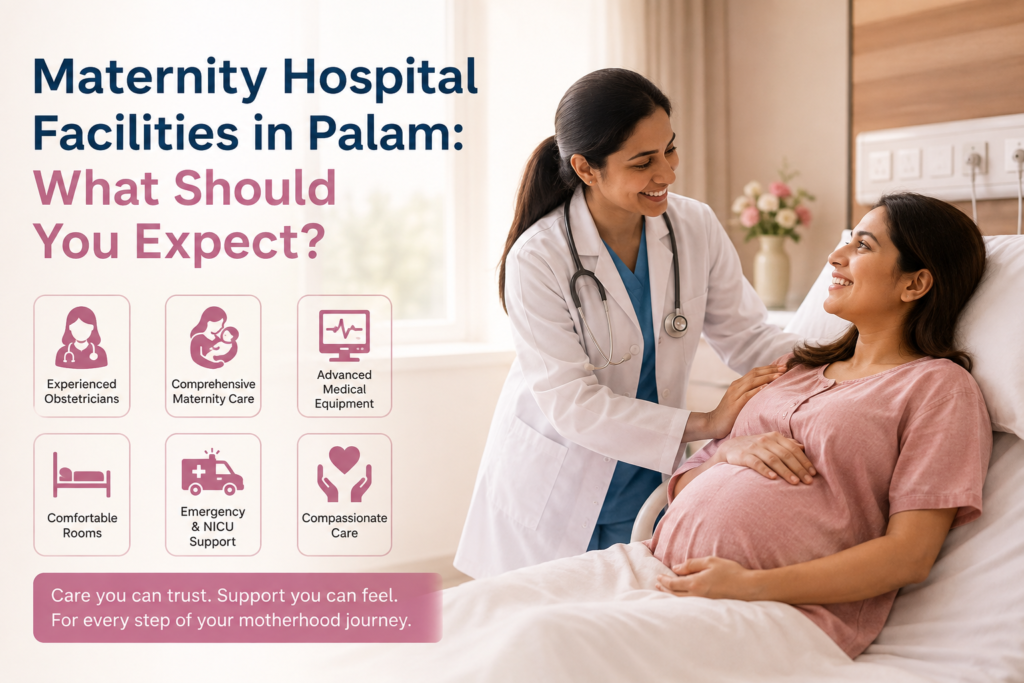
Start With the Labor and Delivery Room Facilities for Maternity Hospital in Palam
The labor room is one of the most important parts of a maternity hospital. Labor can progress differently for every woman.
Some deliveries are straightforward, while others may require closer monitoring or additional medical support. The hospital should therefore have appropriate equipment and trained staff available to monitor both mother and baby.
Depending on your medical needs, a properly equipped labor room may include facilities for monitoring the mother’s vital signs and the baby’s heart rate, oxygen support, suction, emergency medicines and newborn reviving.
You don’t necessarily need to understand every piece of equipment you see during a hospital visit. Instead, ask a simple question:
“What happens here if there is an emergency during labor?”
The hospital should be able to clearly explain how emergencies are handled and who will be available to manage them.
Indian public-health standards also include requirements for labor-room infrastructure, essential equipment, infection control and newborn-care arrangements.

What About the Maternity Rooms?
After delivery, you’ll spend time recovering. Depending on the hospital, you may have the option of a general ward, shared room, semi-private room or private room.
When you visit a hospital, look beyond how attractive the room appears in photographs.
Ask yourself:
- Is the room clean?
- Is there enough ventilation?
- Is the bathroom convenient?
- Can a family member stay with you?
- How frequently do nurses check on patients?
- Is help available if you need assistance?
These practical details can make a noticeable difference when you have just delivered a baby and are recovering.
At the same time, remember that a more expensive room doesn’t necessarily mean better medical care. Room category mainly affects privacy and comfort. The quality of medical care depends on the doctors, nurses, equipment, protocols and emergency facilities available.

Is an Operation Theatre Important if You Want a Normal Delivery?
Yes.
This sometimes surprises expecting parents.
You may be planning a vaginal delivery, and your doctor may also feel that vaginal delivery is appropriate. But pregnancy and labor don’t always follow the plan we make beforehand.
In some situations, a C-section may become medically necessary.
That is why it is worth asking whether the hospital has an appropriately equipped operation theatre and how emergency surgery is handled.
This isn’t about expecting something to go wrong. It is simply about knowing that the hospital is prepared if the situation changes.
A C-section is major surgery and should not be treated as something that is automatically required or automatically undesirable. When medically necessary, it can be an important part of safe maternity care.
Don’t Forget About the Baby’s Care
Choosing a maternity hospital isn’t only about where you will deliver. You should also ask what happens immediately after your baby is born.
Newborns usually receive an initial assessment after birth. Depending on the baby’s condition, the medical team may need to provide additional support.
Ask whether the hospital has facilities for:
- Newborn examination
- Maintaining the baby’s temperature
- Basic newborn resuscitation
- Oxygen support when required
- Breastfeeding assistance
- Newborn monitoring
- Pediatric care
Some hospitals also have nursery or NICU facilities.
If the hospital doesn’t have a higher-level neonatal unit, ask what happens if a baby needs specialized care.
“Where would my baby be taken if advanced neonatal care was required?”
That’s a perfectly reasonable question for parents to ask.
Public-health standards in India also describe newborn-care areas and equipment for initial newborn stabilization and resuscitation.
How Does the Hospital Handle Emergencies?
Pregnancy doesn’t follow office hours.
Labor can start at night. A complication can develop unexpectedly. A baby’s condition can change during labor.
For this reason, ask about the hospital’s emergency arrangements.
You may want to know:
- Is maternity emergency care available around the clock?
- Is an obstetrician available when needed?
- Is emergency surgery possible?
- Is anesthesia support available?
- Is newborn resuscitation available?
- What happens if blood is required?
- Does the hospital have a referral arrangement for cases requiring higher-level care?
You don’t need to assume that every hospital has the same facilities.
In fact, that’s exactly why asking these questions before admission is useful.

What Antenatal Services Are Available?
Good maternity care starts well before the delivery room.
During pregnancy, you may need regular consultations, blood tests, ultrasounds and other investigations depending on your health and your doctor’s recommendations.
Having these services easily accessible can make pregnancy care more convenient.
When considering a maternity hospital in Palam, find out whether you can access:
- Obstetric consultations
- Routine pregnancy investigations
- Ultrasound services
- Antenatal counselling
- Pregnancy monitoring
- High-risk pregnancy evaluation
If you already have a doctor you trust, you may also want to understand whether that doctor provides maternity care at the hospital you’re considering.
What Should You Expect if You Want a Normal Delivery?
If your preference is to have a vaginal delivery, talk openly with your obstetrician about it.
A hospital that supports vaginal birth should provide appropriate monitoring and care throughout labor.
Depending on your situation, this may include maternal monitoring, fetal monitoring, pain-relief options, support during labor and appropriate postpartum care.
But be cautious of anyone who promises that you will definitely have a normal delivery.
No doctor can responsibly guarantee the mode of delivery for every pregnancy.
The goal should be to support vaginal delivery when it is medically appropriate while remaining prepared to change the plan if circumstances require it.
What Happens After Delivery?
Maternity care doesn’t stop once the baby is born.
The mother may need monitoring for bleeding, blood pressure, pain and other aspects of recovery. The baby may need help with feeding, temperature control and routine newborn care.
Good post-delivery support can also include:
- Breastfeeding guidance
- Baby-care instructions
- Medication guidance
- Wound or recovery advice when applicable
- Follow-up planning
- Information about warning signs
Before discharge, you should know when you need to return for follow-up and which symptoms require medical attention.
What About NICU Facilities?
This is worth discussing even if you have had a completely healthy pregnancy.
Not every maternity hospital needs to have a full NICU, but you should know what level of newborn care is available.
Ask:
“If my baby needs more care than the hospital can provide, what is the process?”
A clear answer can tell you a lot about how the hospital approaches emergencies.
What Should You Ask During Your Hospital Visit?
If you’re visiting a maternity hospital in Palam, take a small list of questions with you.
Ask about:
Delivery
- Who will conduct the delivery?
- Is an obstetrician available when labor starts?
- What happens if an emergency C-section is required?
Baby care
- Is a paediatrician available?
- What newborn-care facilities are available?
- Is NICU care available?
- What happens if the baby needs specialised care?
Rooms
- What room options are available?
- What are the charges?
- Can an attendant stay?
Costs
- What does the delivery package include?
- Are doctor fees included?
- Are medicines included?
- What additional charges could arise?
Writing down the answers can make it easier to compare two or three hospitals objectively.
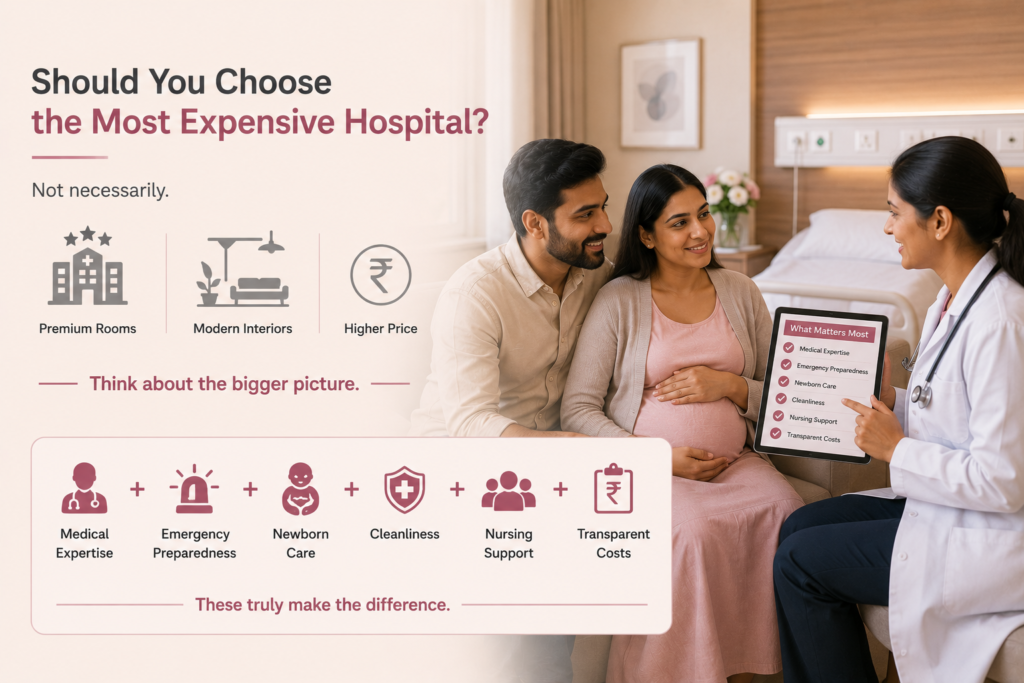
Should You Choose the Most Expensive Hospital?
Not necessarily.
A hospital with premium rooms, modern interiors and a higher price may provide excellent comfort. But those things shouldn’t be the only reasons you choose it.
Think about the bigger picture.
Medical expertise + emergency preparedness + newborn care + cleanliness + nursing support + transparent costs
are far more useful factors to consider.
Choosing a Maternity Hospital in Palam
When you’re making the final decision, think about what matters for your particular pregnancy.
A hospital that is appropriate for one woman may not necessarily be the right choice for another.
Consider:
- Your pregnancy risk level
- The obstetrician caring for you
- Labr-room facilities
- Emergency arrangements
- Newborn-care facilities
- Operation theatre availability
- Post-delivery care
- Cost and insurance coverage
- Distance from your home
- The hospital’s referral arrangements
You can find several maternity and multispecialty hospitals serving Palam and nearby areas. However, facilities and doctor availability can change, so always confirm the current services directly with the hospital before making your final decision.
Final Thoughts
Choosing a maternity hospital is not about finding the hospital with the biggest building or the most attractive room.
It’s about finding a place where you feel confident that you and your baby will receive appropriate care throughout pregnancy, labor, delivery and recovery.
If you’re searching for a maternity hospital in Palam, visit the hospital before your due date, speak with your obstetrician and ask practical questions about delivery, emergencies, newborn care and costs.
You don’t need to predict everything that will happen during your delivery.
You simply need to make sure you’re choosing a facility that is prepared for the possibilities.