
Pushing for four hours during labor can sound worrying, especially if you’re a first-time mother. Many women wonder whether such a long pushing phase is normal or if it means something is wrong. The truth is that every labor is different. While four hours may seem long, it can still be considered normal in certain situations when both the mother and baby are doing well.
Doctors do not decide based on the clock alone. Instead, they carefully monitor the progress of labor, the baby’s condition, and the mother’s health before recommending any intervention.
What Is the Second Stage of Labor?
The second stage of labor begins when the cervix is fully dilated (10 cm) and ends with the birth of the baby. This is the stage during which the mother actively pushes.
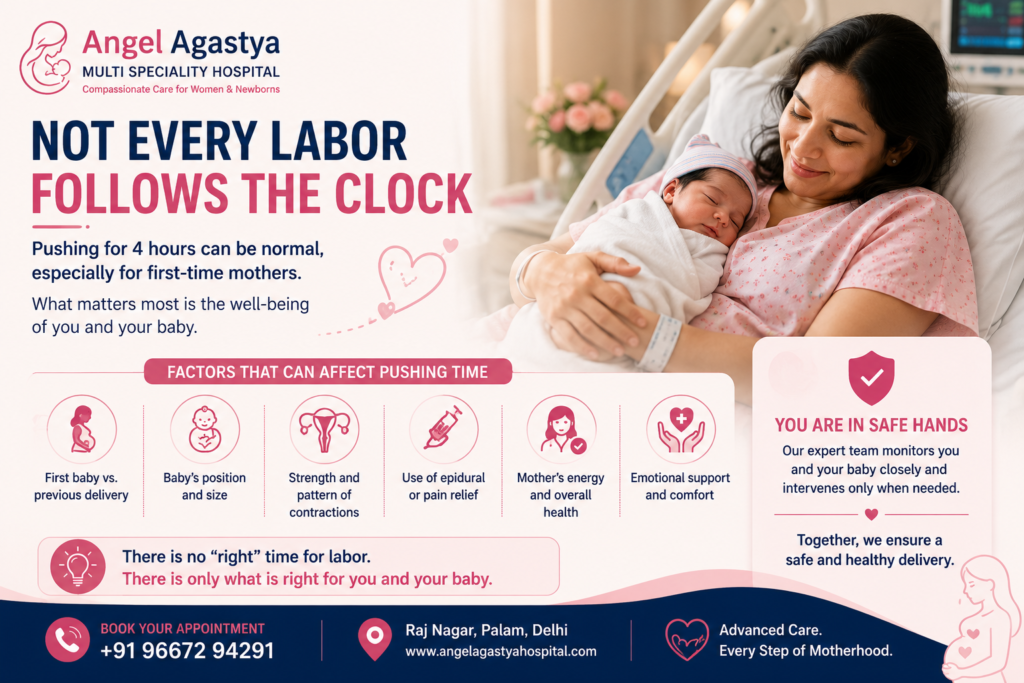
The duration of this stage varies depending on several factors, including:
- Whether it is your first baby
- The baby’s position
- The strength of contractions
- Use of an epidural or other pain relief
- The mother’s overall health
Because every pregnancy is unique, there is no single “normal” pushing time for every woman.
How Long Is Pushing During Labor Normally?
The length of pushing differs from one pregnancy to another.
In general:
- First-time mothers usually push for a longer period.
- Women who have delivered before often have a shorter pushing stage.
- An epidural may increase the duration of pushing because it can reduce the urge to push.
Rather than focusing only on time, doctors pay attention to whether labor is progressing and whether both mother and baby remain healthy.
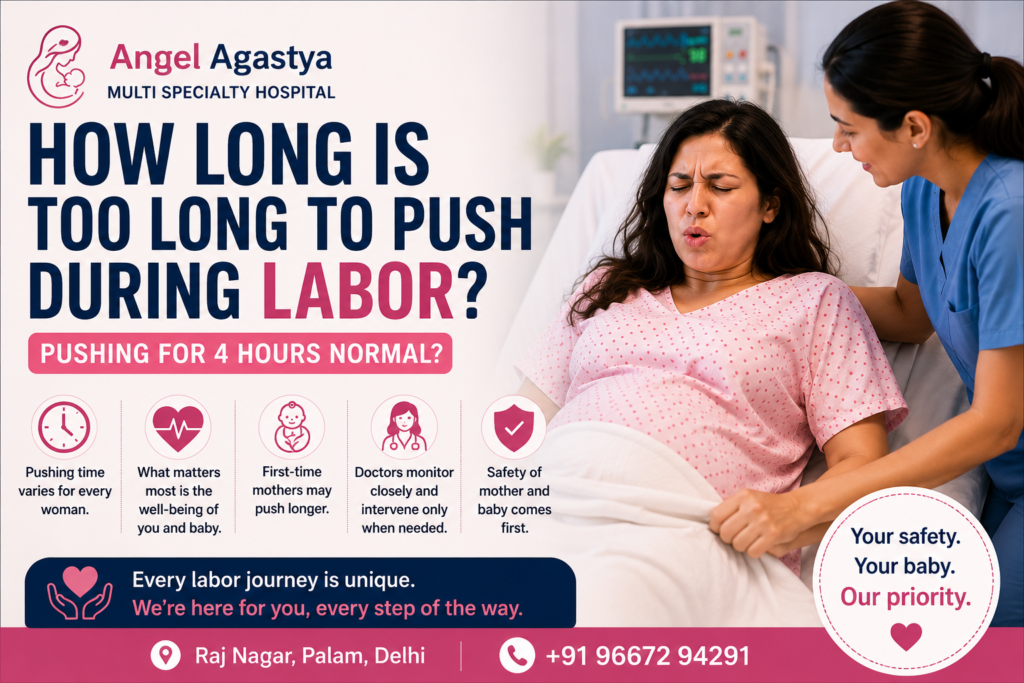
Is Pushing for 4 Hours Normal?
Yes, pushing for four hours can still be normal, particularly during a first delivery.
Doctors may allow pushing to continue if:
- The baby’s heart rate remains reassuring.
- The baby continues to move down the birth canal.
- The mother is coping well and remains stable.
- Labor is showing steady progress.
If these conditions are met, continuing to push is often considered safe under close medical supervision.
Why Does the First Baby Usually Take Longer?
First-time mothers often experience a longer second stage of labor because the body is going through the process for the first time.
Some common reasons include:
- Pelvic muscles are less stretched.
- The baby may descend more slowly.
- Learning an effective pushing technique takes time.
- Labor naturally progresses more gradually.
This is why healthcare providers are generally more patient during a woman’s first delivery.
Is Prolonged Pushing Dangerous?
Long pushing is not automatically dangerous, but it requires careful monitoring.
Possible risks may include:
- Maternal exhaustion
- Increased swelling or vaginal tears
- Reduced effectiveness of contractions
- Signs of fetal distress if oxygen levels decrease
Doctors continuously monitor both the mother and baby throughout labor. If any concerns arise, they recommend the safest option for delivery.
When Do Doctors Decide to Intervene?
The decision to intervene depends on the overall condition of the mother and baby—not simply the number of hours spent pushing.
Medical intervention may be recommended if:
- Labor has stopped progressing.
- The baby shows signs of distress.
- The mother becomes extremely exhausted.
- There are concerns about the safety of continuing vaginal delivery.
Depending on the situation, doctors may recommend:
- Assisted vaginal delivery using forceps or a vacuum
- Cesarean (C-section) delivery
The goal is always a safe outcome for both mother and baby.
Tips to Cope with a Long Pushing Stage
If pushing lasts longer than expected, these measures can help:
- Follow your doctor’s and nurse’s instructions.
- Practice controlled breathing techniques.
- Rest between contractions whenever possible.
- Stay hydrated if permitted.
- Change positions if recommended.
- Accept encouragement and support from your birth team.
Frequently Asked Questions (FAQs)
1. Can an epidural make pushing last longer?
Yes. An epidural may reduce the urge to push, which can increase the duration of the second stage of labor.
2. Does pushing for four hours always mean something is wrong?
No. If both mother and baby are doing well and labor is progressing, pushing for four hours may still be considered normal.
3. Can changing positions help during labor?
Yes. Upright, squatting, kneeling, or side-lying positions may help the baby descend more effectively in some cases.
4. When is a C-section recommended?
A C-section may be advised if labor stops progressing, the baby shows signs of distress, or continuing vaginal delivery becomes unsafe.
5. How do doctors monitor the baby during pushing?
Doctors regularly monitor the baby’s heart rate and assess labor progress to ensure both mother and baby remain safe throughout delivery.
Final Thoughts
Every labor is unique, and there is no fixed time limit for pushing. Pushing for four hours does not necessarily mean something is wrong. The most important factors are steady labor progress, the mother’s well-being, and the baby’s condition. With proper monitoring and timely medical care, doctors can make the safest decisions for both mother and child.
Pregnancy & Delivery Care at Angel Agastya Hospital
If you have questions about labor, delivery planning, or a high-risk pregnancy, consult an experienced obstetrician for personalized guidance.
Angel Agastya Multi Specialty Hospital provides comprehensive maternity care, including antenatal check-ups, high-risk pregnancy management, normal delivery, painless delivery, C-section, and postnatal care.
Address: Raj Nagar, Palam, Delhi
Call: +91 96672 94291