
Bringing your newborn home is a pure, emotional milestone and usually a completely exhausting one! While everyone’s attention naturally shifts to the baby, your body is embarking on a major recovery journey of its own.
Every mother’s recovery timeline looks different. How quickly you bounce back depends on the length of your labor, whether you had stitches, your sleep levels, and how breastfeeding is going. Understanding what’s normal and what needs medical attention helps you rest and heal with total confidence.
Here is a practical, week-by-week guide to recovering at home after a vaginal delivery.

The Early Days: Week-by-Week Healing Timeline
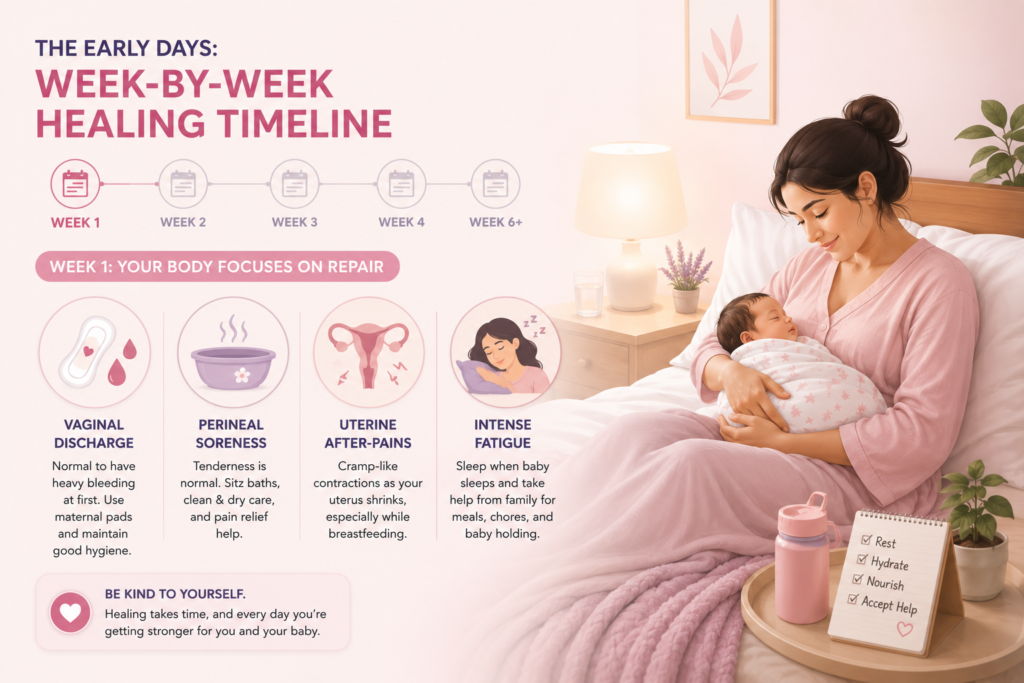
Week 1: Your Body Focuses on Repair
The first week is the most physically demanding phase of postpartum recovery.
- Vaginal Discharge (Lochia): It’s completely normal to experience heavy, period-like bleeding at first, which gradually lightens in both flow and color. Always use maternal pads (not tampons) and follow good hygiene practices.
- Perineal Soreness: If you experienced a tear or an episiotomy, tenderness is expected. Gentle sitz baths, keeping the area clean and dry, and taking prescribed pain relief will bring comfort.
- Uterine After-Pains: You might feel cramp-like contractions as your uterus shrinks back to its normal size especially while breastfeeding, which triggers oxytocin.
- Intense Fatigue: Sleep when the baby sleeps, and lean heavily on family members for meals, household chores, and baby holding!
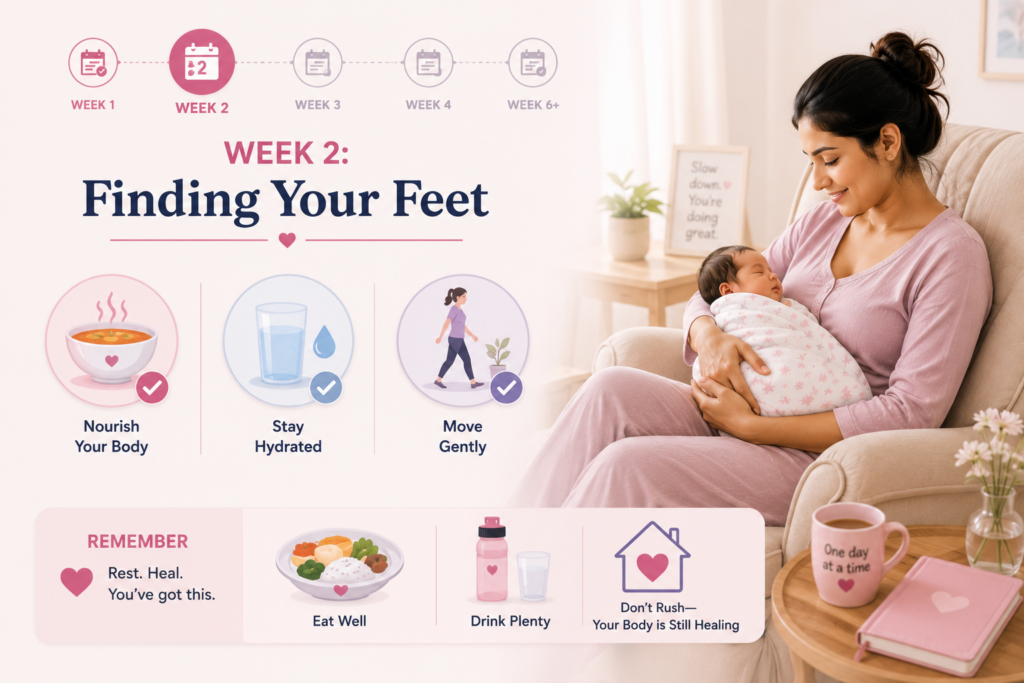
Week 2: Finding Your Feet
By the second week, your mobility and energy levels will start to pick up, though your body is still actively healing inside.
- Continue prioritizing warm, home-cooked meals, plenty of water, and gentle movement around the house.
- Avoid pushing yourself too hard simply because you feel slightly better.
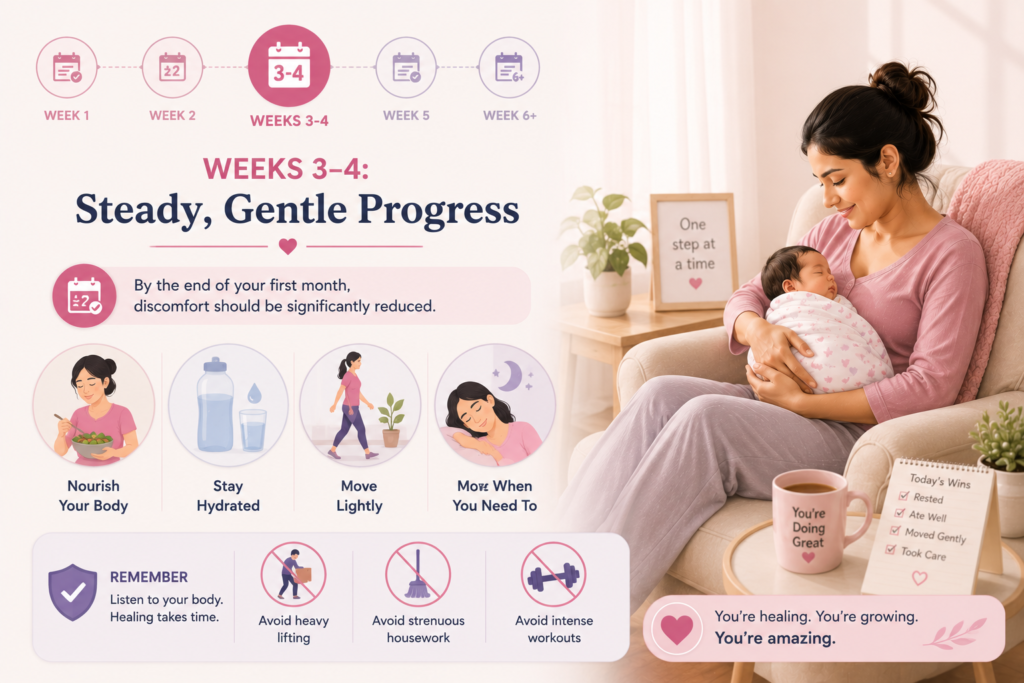
Weeks 3–4: Steady, Gentle Progress
By the end of your first month, discomfort should be significantly reduced.
- You can slowly return to light daily routines, but avoid heavy lifting, strenuous housework, or intense workouts just yet.
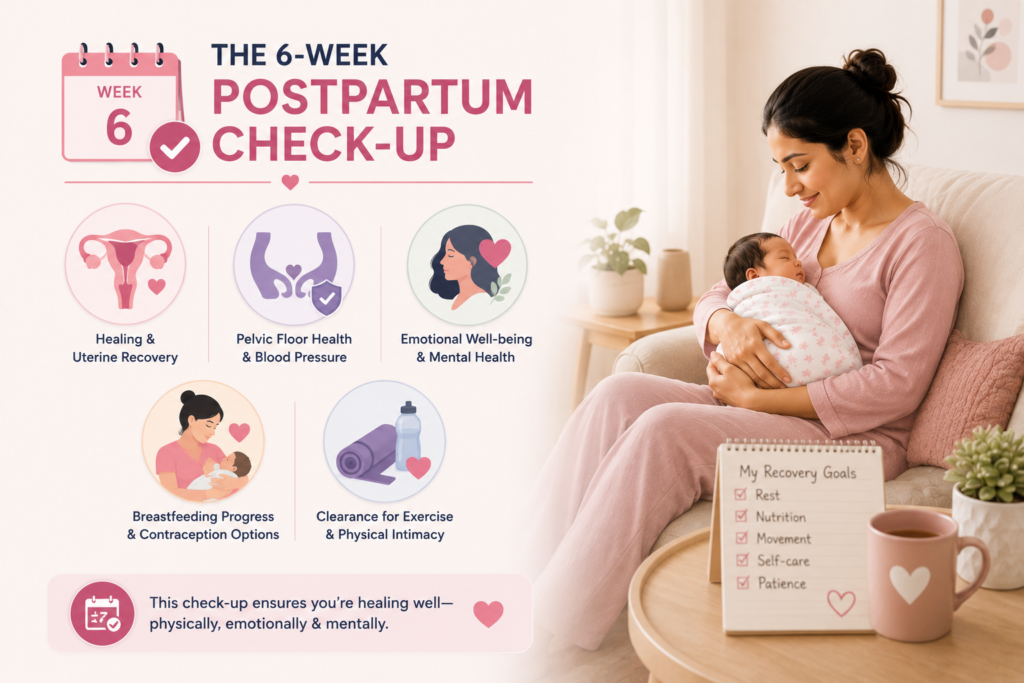
The 6-Week Postpartum Check-Up
Around week six, you’ll meet with your gynecologist for your formal postpartum assessment. Your doctor will evaluate:
- Perineal or stitch healing & uterine recovery
- Pelvic floor health & blood pressure
- Emotional well-being & mental health
- Breastfeeding progress & safe contraception options
- Clearances for regular exercise and physical intimacy
Rebuilding Strength: Nutrition & Hydration
Postpartum healing and breastfeeding both require a lot of fuel. Keep your strength up by focusing on:
- Protein & Iron: Lentils, eggs, lean meats, and green leafy vegetables to rebuild tissue and restore iron levels.
- Fiber & Whole Grains: Oats, fruits, and vegetables to keep digestion smooth and prevent uncomfortable post-delivery constipation.
- Hydration: Keep a water bottle within reach at all times—especially during nursing sessions.
Navigating Emotional Changes & Breastfeeding
Nurturing Your Emotional Health
A sudden drop in hormones, sleep deprivation, and the transition into motherhood can bring emotional highs and lows. Mild, temporary tearfulness (the “baby blues”) is common in the first two weeks.
However, if persistent sadness, intense anxiety, detachment, or feeling overwhelmed lasts longer than two weeks, please reach out to us. Postpartum depression is common, treatable, and nothing to suffer through alone.
Getting Breastfeeding Right
Breastfeeding is a natural skill, but it takes practice for both you and your baby. Initial soreness or latching struggles can happen. Seeking early guidance from your maternity team can prevent cracked nipples, engorgement, or unnecessary stress.
Postpartum Warning Signs: When to Call Your Doctor
While minor soreness is part of healing, seek immediate medical care if you notice any of these warning signs:
- Unusually heavy vaginal bleeding (soaking a pad in an hour)
- High fever or chills
- Severe or worsening lower abdominal pain
- Foul-smelling discharge
- Chest pain, shortness of breath, or severe headaches
- Pain, redness, or significant swelling in your legs
- Persistent feelings of hopelessness or severe anxiety
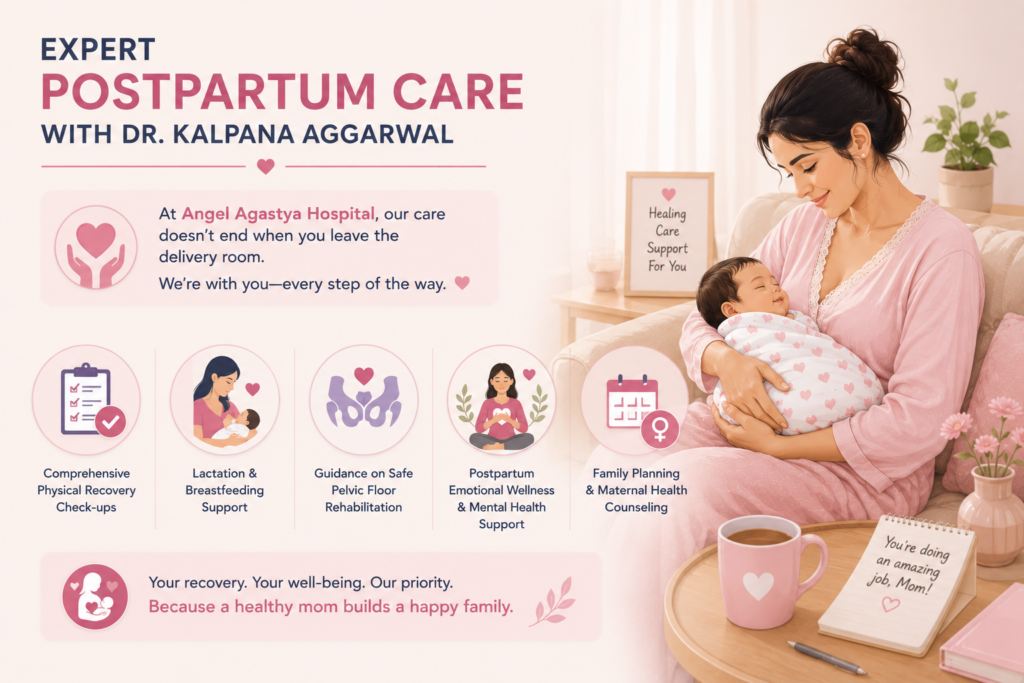
Expert Postpartum Care with Dr. Kalpana Aggarwal
At Angel Agastya Hospital, our care doesn’t end when you leave the delivery room. Dr. Kalpana Aggarwal and her team provide dedicated postpartum support for mothers in Palam and nearby areas:
- Comprehensive physical recovery check-ups
- Lactation and breastfeeding support
- Guidance on safe pelvic floor rehabilitation
- Postpartum emotional wellness & mental health support
- Family planning and maternal health counseling
Frequently Asked Questions
Q1: How long does bleeding continue after a normal delivery?
Postpartum bleeding (lochia) typically lasts anywhere from 2 to 6 weeks, gradually changing from bright red to pink, brown, and eventually yellowish-white.
Q2: When can I start exercising after a vaginal birth?
Gentle walking can begin almost right away. However, core work, heavy weights, or high-impact exercise should wait until you get the green light at your 6-week check-up.
Q3: Is pelvic floor leakage normal after a vaginal birth?
It is common due to the strain of labor, but it shouldn’t be ignored. Targeted pelvic floor (Kegel) exercises and guidance from your doctor can help restore bladder control and core strength.
We’re Here for Your Recovery Journey
Your health and peace of mind matter just as much as your baby’s. If you have questions about bleeding, pain relief, breastfeeding, or emotional well-being, we’re here to help.