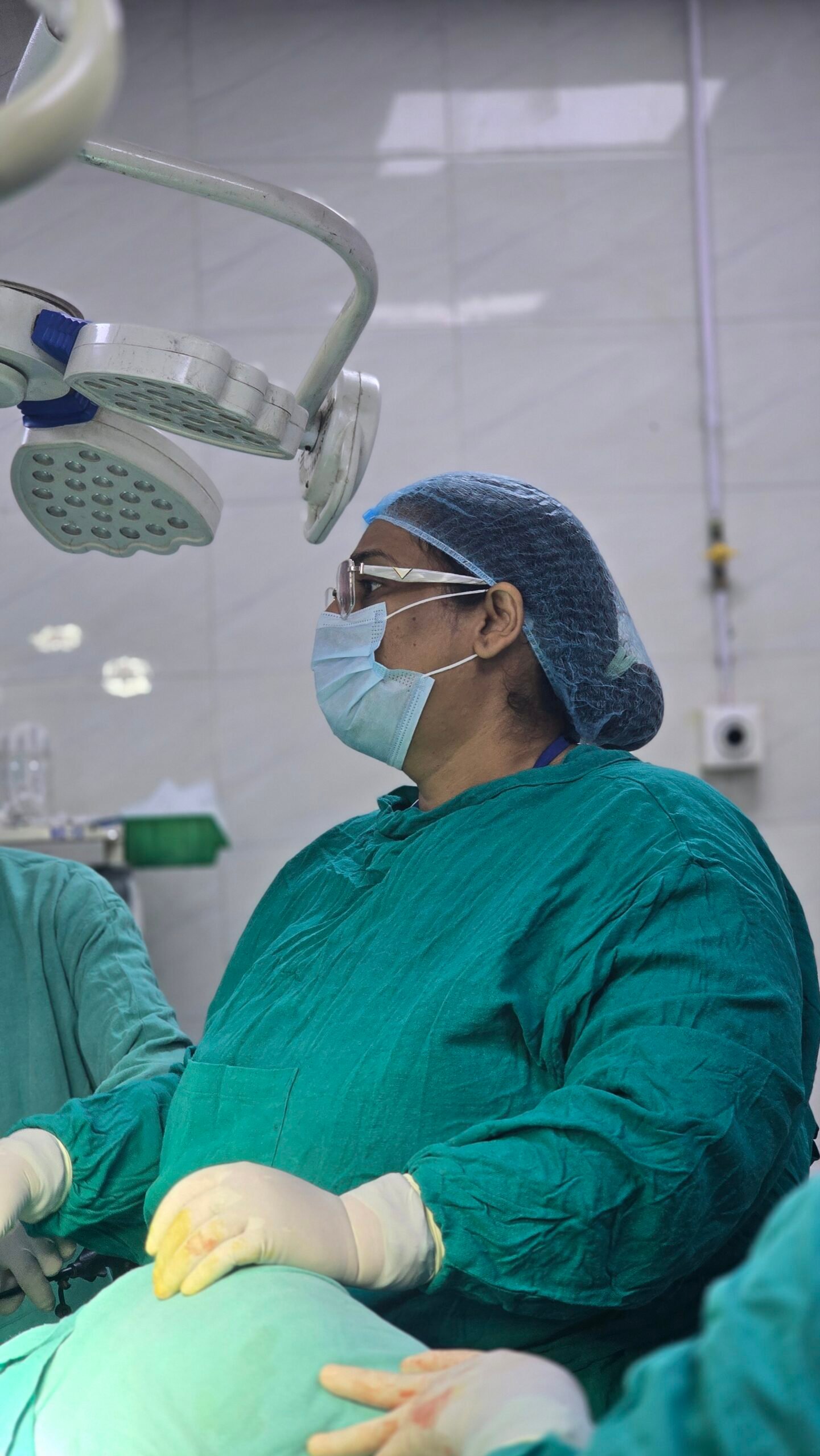


VBAC Delivery Hospital Near Janakpuri
Personalized VBAC Care with Dr. Kalpana Aggarwal
Many women who have delivered their first baby by Cesarean Section (C-Section) wonder whether they can have a normal delivery in their next pregnancy.
The answer is that many women may be suitable candidates for VBAC (Vaginal Birth After Cesarean) after careful medical evaluation.
If you’re searching for a VBAC Delivery Hospital Near Janakpuri, Dr. Kalpana Aggarwal at Angel Agastya Hospital provides individualized VBAC assessment, pregnancy monitoring, labor management, and delivery planning to help mothers make informed decisions about childbirth.
Every pregnancy is unique, and our goal is to provide evidence-based care while prioritizing the safety of both mother and baby.
What is VBAC?
VBAC (Vaginal Birth After Cesarean) refers to delivering a baby vaginally after having one previous cesarean section.
Instead of automatically scheduling another C-section, some women may be offered a Trial of Labor After Cesarean (TOLAC) if they meet specific medical criteria.
Whether VBAC is appropriate depends on several maternal and pregnancy-related factors.
Who May Be a Candidate for VBAC?
Your obstetrician will evaluate several important factors, including:


Every woman’s situation is different, which is why a personalized consultation is essential
Symptoms That Should Never Be Ignored
Contact your obstetrician immediately if you experience:
Vaginal bleeding
Leakage of amniotic fluid
Severe abdominal pain
Persistent headaches
Blurred vision
Sudden swelling of the face or hands
Prompt medical evaluation can help identify complications early and guide appropriate treatment.
Understanding the Risks
Like every delivery method, VBAC has certain risks. One of the most important concerns is uterine rupture, which occurs when the previous cesarean scar separates during labor. Although uncommon, it can become a medical emergency, which is why VBAC should only be attempted after specialist assessment and in a hospital equipped for emergency obstetric care. At Angel Agastya Hospital, continuous maternal and fetal monitoring helps ensure timely medical decisions throughout labor.
Does High-Risk Pregnancy Always Mean a C-Section?
No, Many women with high-risk pregnancies can still have successful vaginal deliveries when conditions remain favorable. The method of delivery depends on several factors, including

Mother's health

Baby's position

Placental location

Labor progression

Previous pregnancy history
Your obstetrician will recommend the safest option based on your individual circumstances.
Our VBAC Evaluation Process
Previous Pregnancy Review
Dr. Kalpana Aggarwal reviews your previous delivery, surgical history, C-section reason, recovery, and any past pregnancy complications.
Current Pregnancy Assessment
Your present pregnancy is carefully monitored with regular check-ups, ultrasounds, blood tests, BP checks, baby’s growth, and placental evaluation.
Individual Risk Assessment
VBAC suitability depends on maternal health, previous uterine surgery, current pregnancy findings, baby’s wellbeing, and expected delivery conditions.
Birth Planning
A personalized delivery plan covers labor expectations, warning signs, pain relief, hospital admission, emergency preparedness, and delivery planning.
Safe Delivery Planning
As your due date approaches, Dr. Kalpana Aggarwal guides you on delivery options, hospital admission, warning signs, and the safest plan for you and your baby.
Why Choose Dr. Kalpana Aggarwal?
Compassionate patient counselling
Personalized maternity care
Advanced fetal monitoring
High-risk labor planning
Postpartum care
Why Choose Angel Agastya Hospital?
Our maternity team focuses on providing safe and supportive pregnancy care through:
Normal Delivery Support
Pregnancy Care
Pregnancy Monitoring
VBAC Evaluation
Follow Us on Social Media
Frequently Asked Questions
Yes. Many women may be suitable candidates for VBAC after careful evaluation. Your obstetrician will assess your previous cesarean, current pregnancy, and overall health before making a recommendation.
VBAC can be a safe option for appropriately selected women when managed by an experienced obstetrician in a hospital equipped for emergency obstetric care.
Women with certain uterine scars, multiple previous cesarean deliveries, placental complications, or specific medical conditions may be advised to have a repeat cesarean section. Your doctor will explain the safest option based on your pregnancy.
No. Even women who are suitable candidates for VBAC may require a cesarean section if labor does not progress safely or complications arise.
Ideally, discuss VBAC early in pregnancy so your doctor has enough time to review previous medical records, assess your current pregnancy, and develop a personalized birth plan.