
Are Irregular Periods a Health Concern?
I’ve spent over 20 years sitting in consultation rooms, listening to women share their deepest health worries. One of the most common things I hear—usually whispered with a bit of anxiety—is: “Doctor, my period is all over the place. Is something wrong with me?”
In our clinic at Angel Agastya, I see patients from all walks of life—students, busy professionals, and mothers. Many of them come in clutching a period-tracking app on their phone, worried because they aren’t hitting that “perfect” 28-day mark. If you’ve ever felt that same pit in your stomach when your cycle doesn’t arrive on time, I want you to take a deep breath.
Your body isn’t a machine. It’s a living, breathing system that reacts to the world around it. While a regular cycle is a good sign of health, an irregular one isn’t always a disaster. It’s more like a “check engine” light in your car—it’s a signal to look under the hood, but it doesn’t mean the whole engine is broken.
What Are Considered Irregular Periods?
When we talk about what’s “normal,” we have to look at the averages. A typical menstrual cycle usually lasts between 21 to 35 days. We start counting from the first day of one period to the first day of the next one.
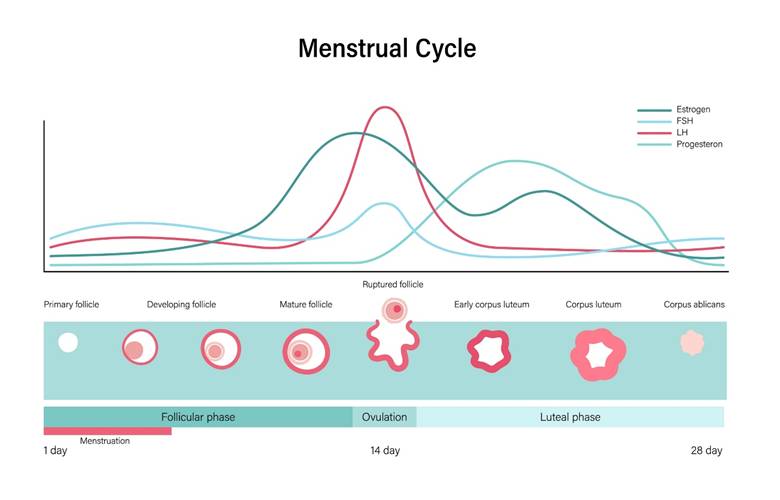
Now, here is the thing: very few women are exactly 28 days every single month. However, I consider a cycle “irregular” if:
- Your periods come more often than every 21 days or further apart than 35 days.
- You suddenly skip your periods for three months or more.
- Your bleeding lasts much longer than it used to (say, more than 8 days).
- Your flow is so heavy that you’re soaking through a pad every hour.
- You start spotting or bleeding between your actual periods.
One or two weird months? Usually, that’s just life happening. But when your cycle loses its rhythm consistently, that’s when we need to talk.
What Causes Irregular Periods?
In my experience, the causes are often simpler than patients fear. Your reproductive system is very sensitive to change. I like to tell my patients that the part of the brain that controls your periods is like a sensitive thermostat. If the “room” gets too stressed or too cold, the thermostat shuts things down to save energy.
Common reasons I see for this “shutdown” include:
- High Stress: I once saw a patient, a young woman named Aditi, who was preparing for her UPSC exams. She hadn’t had a period in four months. We found nothing physically wrong; her brain was simply under so much pressure that it put her cycle on “pause.”
- Weight Shifts: Losing or gaining a lot of weight quickly can confuse your hormones.
- Sleep and Routine: If you work night shifts or travel across time zones, your body’s internal clock gets messy, and your period often follows suit.
- Over-exercising: I see this in “gym rats” or marathon runners. If you’re burning more fuel than you’re taking in, your body decides that having a period is a “luxury” it can’t afford right now.
Common Symptoms That Come With Irregular Periods
It isn’t just about the date on the calendar. Often, an irregular cycle brings friends along. You might notice:
- Unpredictable Bleeding: You never know when to wear your “good” clothes because you might start spotting at any time.
- Cramp Changes: Some of my patients report that when their periods are late, the cramps are actually worse when they finally arrive.
- Fatigue: Feeling completely drained, especially if you are bleeding heavily (which can lead to low iron).
- Mood Swings: Because your hormones are fluctuating wildly instead of following a smooth curve, your mood might feel like a rollercoaster.
Irregular Menstrual Cycle – When It’s Usually Not a Problem
There are “grace periods” in life where I tell my patients not to worry about irregularity. These are phases where the body is naturally adjusting its chemistry:
- The Teenage Years: When a girl first starts her period, the “communication” between her brain and ovaries is still being wired. It can take a few years for things to settle down.
- Post-Baby and Breastfeeding: Your body is flooded with prolactin (the milk hormone), which naturally tells your ovaries to take a break.
- Perimenopause: For women in their 40s, the ovaries are starting to wind down. Cycles might get shorter, then longer, then skip entirely. This is a natural transition, not a disease.
Missed Periods – Common Reasons
If your period has gone missing entirely—what we call amenorrhea—it can be startling. If you aren’t pregnant, the most common reasons I find in my clinic are related to lifestyle.
Sometimes, it’s a sudden illness. Even a bad case of the flu or COVID-19 can knock your cycle off for a month. Other times, it’s “functional” stress. Your body is trying to protect you. If it feels you are in a state of “famine” (too little food) or “flight” (too much stress), it stops ovulation to ensure you don’t get pregnant when you’re already struggling.
How Hormones Affect Menstrual Regularity
This is where the science gets interesting. Your period is a dance between estrogen and progesterone. If that dance is interrupted, the rhythm breaks.
When it comes to hormonal imbalances, I often look for two things:
- Polycystic Ovary Syndrome (PCOS): This is very common in Delhi. It can cause your body to produce more “male” hormones than usual, which stops you from ovulating regularly.
- Thyroid Issues: Your thyroid is the master controller of your metabolism. If it’s too slow (hypothyroidism) or too fast, your periods will almost always be the first thing to change.
- Insulin Resistance: This is often linked to diet. If your blood sugar is spiking and crashing like a plane in a storm, your hormones will never be stable.
When Should Irregular Periods Be Checked by a Doctor?
I don’t want you to wait until you’re in pain to see me. You should book a visit if:
- You’ve missed three periods in a row.
- Your cycle was regular for years and suddenly changed for no reason.
- You’re bleeding so heavily that you feel dizzy or short of breath.
- You are having “breakthrough” bleeding after sex or between cycles.
- You’re trying to get pregnant and can’t track your ovulation because your dates are so unpredictable.
Early checks are key. Most of the time, we can fix things with simple lifestyle changes or mild medication before they become a bigger headache.
The “Case Study” Snippet
Recently, a patient came in worried about her “vanishing” periods. She was 32 and had always been regular. After we talked, it turned out she had recently switched to a very strict keto diet and was intermittent fasting. Her body was essentially in “starvation mode.” We adjusted her nutrition to include more healthy fats and complex carbs, and her period returned naturally within eight weeks—no heavy medication required.
The Dr. Signature: My Take
“In my 20 years of practice, I’ve seen that your cycle is a mirror of your life. If your life is chaotic, your period usually will be too. Don’t just treat the symptoms—look at your sleep, your stress, and your plate. Your body is talking to you; my job is to help you translate what it’s saying.”
— Dr Kalpana Aggarwal, Angel Agastya Multi Specialty Hospital
Frequently Asked Questions (FAQs)
1. Is it common to have an irregular period once in a while?
Yes, it’s very common. Nearly every woman will experience a “off” month due to stress, travel, or illness. It’s only a concern if it becomes your new “normal.”
2. How many days late is considered irregular?
If your period is consistently more than 7 to 10 days late every month, or if the length of your cycle changes by more than a week each time, we categorize it as irregular.
3. Can stress alone stop my period?
Absolutely. High levels of cortisol (the stress hormone) can literally tell your brain to stop the hormones that trigger ovulation.
4. Will I be able to get pregnant if my periods are irregular?
It can be harder because it’s difficult to know when you’re ovulating, but it’s definitely possible. Often, once we regulate the cycle, fertility improves significantly.
5. Are irregular periods always treated with birth control?
Not at all. While the pill is one tool, I prefer to look for the root cause—like thyroid issues or lifestyle factors—before just “masking” the problem with hormones.
Summary
Irregular periods are usually a sign that your body is responding to a change—be it physical, emotional, or hormonal. While many cases are linked to temporary stress or life stages like puberty and menopause, persistent changes shouldn’t be ignored. By watching your patterns and listening to your body, you can take control of your health.
If you’re worried about your cycle, you don’t have to figure it out alone.
Ready to get your rhythm back? Don’t spend another night Googling your symptoms. Let’s sit down and talk about what’s going on with your health. You deserve a personalized plan that fits your life.
📍 Visit Us: Angel Agastya Multi Speciality Hospital, Raj Nagar, Palam, Delhi
📞 Call us today to book an appointment: +91 96672 94291