
VBAC First Baby Was Cesarean — Is Normal Delivery Really Possible? Dr. Kalpana Aggarwal’s Expert Guide in Delhi
Yes, a VBAC normal delivery after C-section in Delhi (VBAC) is absolutely possible for many mothers. In fact, countless women who had their first baby by cesarean successfully go on to have a smooth vaginal birth the second time. This is known as VBAC (Vaginal Birth After Cesarean) — and under the guidance of a VBAC specialist doctor in Delhi like Dr. Kalpana Aggarwal, it can be a safe and empowering option.
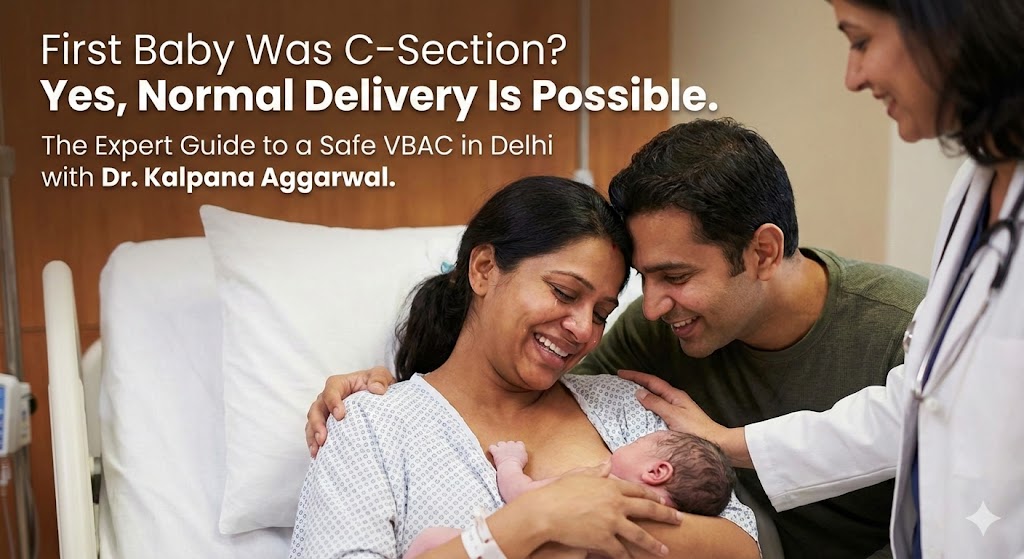
At Angel Agastya Multi Speciality Hospital, one of the trusted normal delivery hospitals in Delhi, mothers receive a personalized evaluation to determine whether VBAC is the safest choice for their next birth.
🔍 What Exactly Is VBAC?
VBAC means giving birth vaginally after having a cesarean in a previous pregnancy. Many women prefer it because:
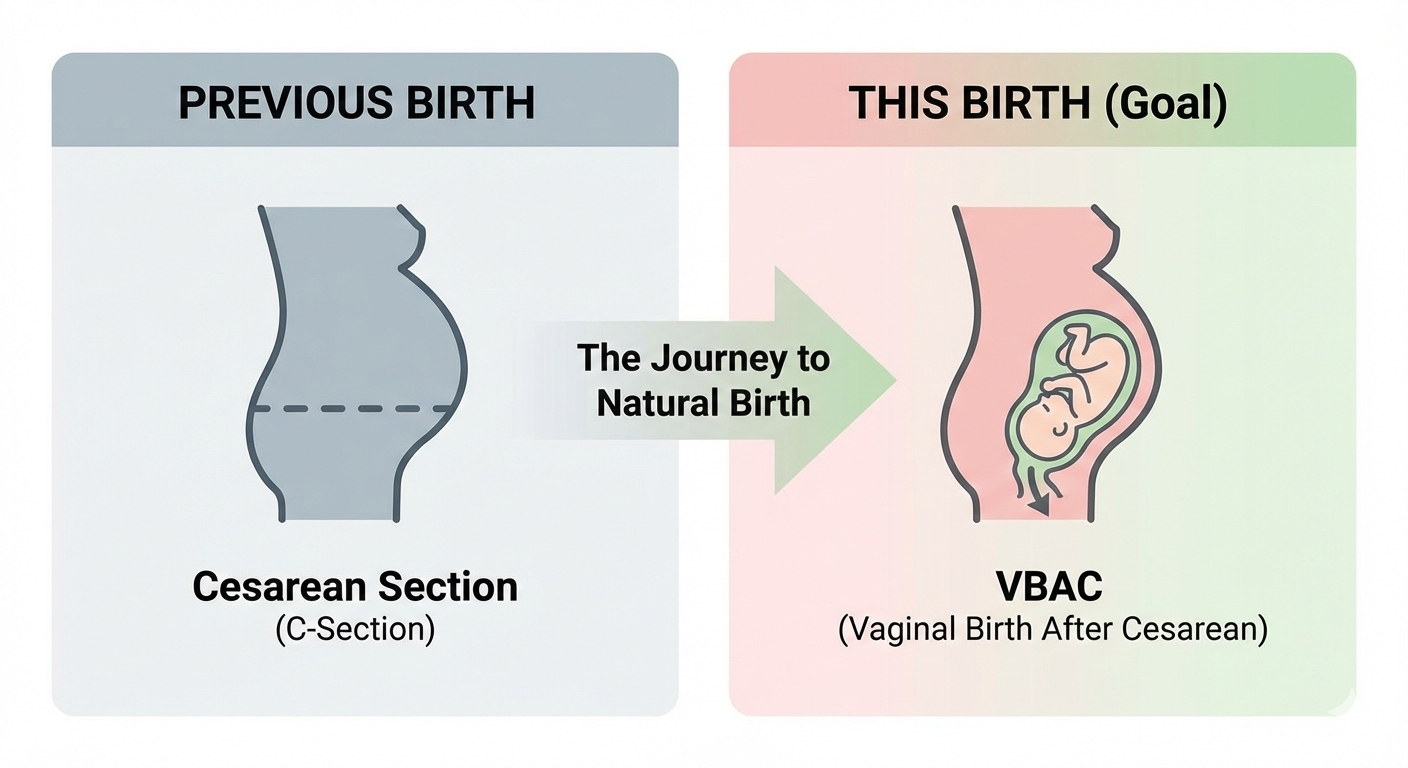
- recovery is much faster
- surgical complications are lower
- mobility returns sooner
- breastfeeding becomes easier
- it provides a natural and emotionally fulfilling birth experience
As a dedicated gynecologist for normal delivery in Delhi, Dr. Kalpana Aggarwal focuses on evidence-based assessment before recommending VBAC.
🩺 Who Is a Good Candidate for VBAC?
You may have a high chance of a second delivery normal after C-section (VBAC) if:
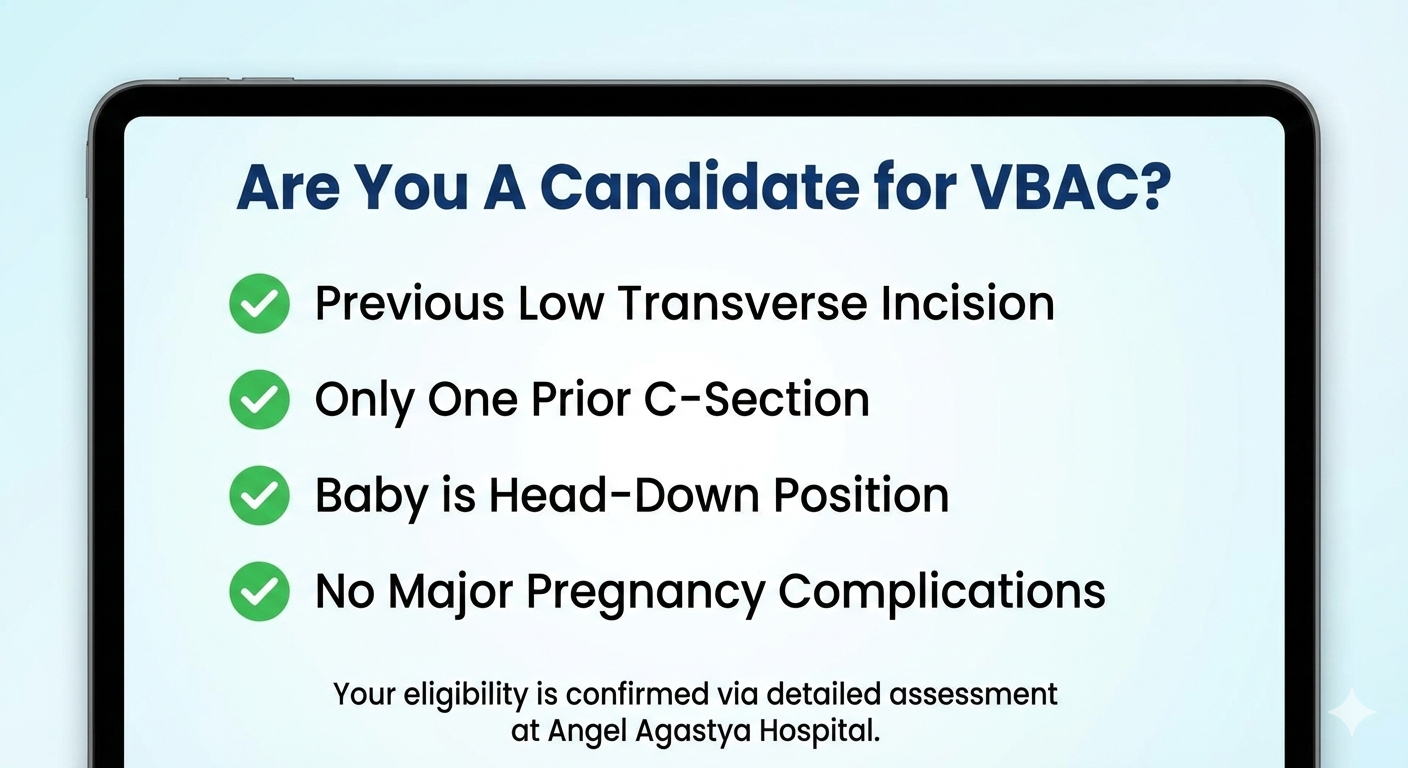
- your previous cesarean had a low transverse incision
- your baby is head-down
- you have no placenta previa
- there are no major pregnancy complications
- you’ve had only one prior C-section
Your eligibility is always confirmed through a detailed clinical review at our center, guided by the best obstetrician in Delhi for VBAC.
🚫 When VBAC May Not Be Recommended
VBAC or normal delivery after cesarean is usually avoided when:

- the earlier incision was vertical
- you’ve had multiple C-sections with no prior vaginal delivery
- fetal growth is severely restricted
- twin/multiple pregnancy is involved (case-specific)
In these situations, choosing a monitored C-section with a high-risk pregnancy expert becomes the safer route.
🌟 Benefits of Choosing VBAC
If medically suitable, VBAC offers many advantages:
- quicker recovery than surgery
- reduced infection and bleeding risks
- smoother postpartum healing
- better early bonding and breastfeeding
- boosts confidence in natural birthing
No wonder so many mothers prefer trying a VBAC at hospitals that actively support normal delivery.
⚠️ Understanding the VBAC Risks
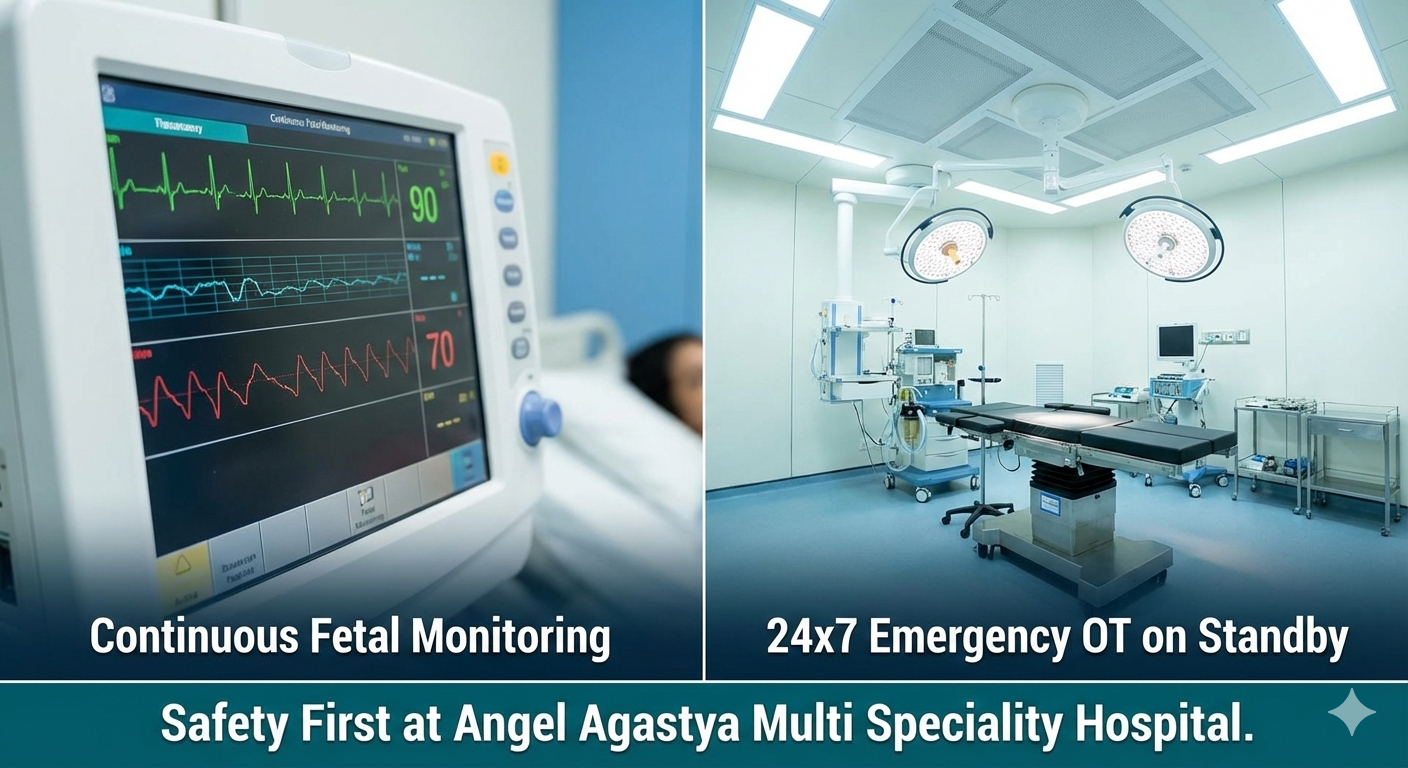
The main risk associated with VBAC is uterine rupture — rare but serious. This is why VBAC should be attempted only where:
- OT & NICU are available 24×7
- emergency C-section support exists
- continuous fetal monitoring is possible
Angel Agastya Hospital provides all these facilities, making it a safe choice for mothers planning a VBAC.
🏥 Why Choose Angel Agastya Hospital for VBAC?
- Led by experienced obstetric experts
- VBAC-supportive labor protocols
- Emergency C-section team on standby
- Calm, supportive, mother-friendly environment
- Specialized evaluation for high-risk pregnancies
Here, you receive complete guidance on whether normal delivery after cesarean VBAC is the right path for you.
❤️ Summary
A previous cesarean does not mean you must repeat surgery. With proper assessment and expert care, thousands of women achieve a safe VBAC every year — and your story could be one of them.
Curious to know your VBAC success rate or whether you’re a suitable candidate?
📞 Book a consultation today with Dr. Kalpana Aggarwal
📍 Angel Agastya Multi Speciality Hospital, Raj Nagar, Palam, Delhi
🔹 Trusted normal delivery hospital in Delhi
📞 +91 96672 94291
⭐ FAQs
- 1. Is VBAC normal delivery possible after a previous C-section?
Yes, a normal delivery after C-section is possible for many women. Your chances depend on factors like the type of previous incision, current pregnancy health, and baby’s position. A VBAC specialist can confirm your eligibility. - 2. What is the success rate of VBAC?
VBAC success rates generally range from 60% to 80% when patients meet the medical criteria. Hospitals with 24×7 monitoring, NICU, and emergency OT facilities further improve safety and outcomes. - 3. Is VBAC safe for the baby?
Yes, VBAC is safe for the baby when monitored closely by an experienced obstetrician. Continuous fetal heart monitoring and an emergency-ready team ensure safety throughout labor. - 4. When should VBAC be avoided?
VBAC is not recommended if you had a vertical uterine incision, multiple previous C-sections without any vaginal birth, placenta previa, or major pregnancy complications. In such cases, a planned C-section is safer. - 5. How do I know if I’m a good candidate for VBAC?
You need a detailed evaluation by a gynecologist. Doctors assess your medical records, previous delivery details, incision type, baby’s position, and any pregnancy risks before confirming whether VBAC is suitable for you.